
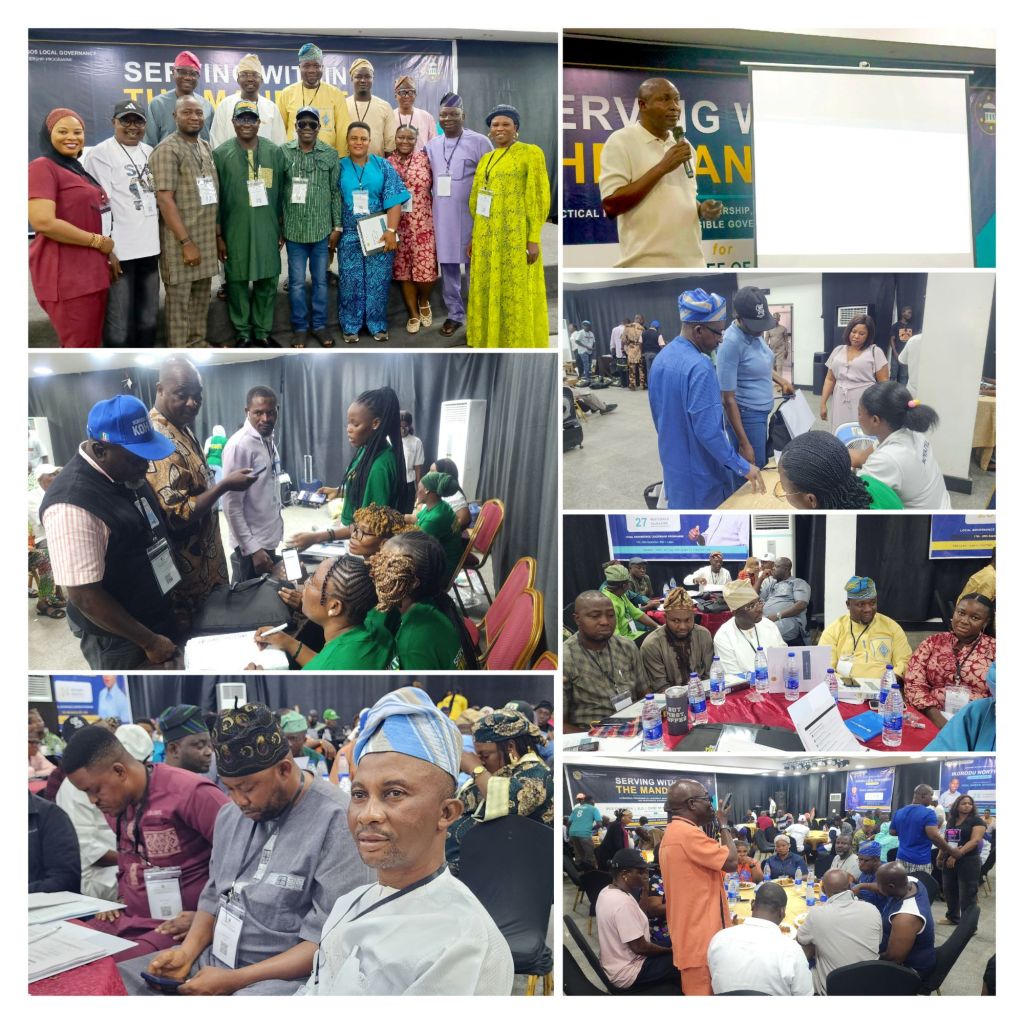
A total of 170 political office holders from the six councils in Ikorodu Division have commenced a leadership development seminar aimed at strengthening their capacity for responsible governance, effective representation and improved service delivery.
The participants comprise Vice Chairmen, Councillors, Secretaries to Local Governments (SLGs), Chiefs of Staff, Supervisors and Special Advisers from Ikorodu Local Government, Igbogbo/Bayeku LCDA, Ijede LCDA, Ikorodu West LCDA, Ikorodu North LCDA and Imota LCDA.
The seminar, themed “Serving Within Mandate,” is structured as a practical leadership development platform focusing on governance, managing expectations, understanding institutional boundaries and delivering responsibly to the people.
The Director-General of iCARE Foundation and lead speaker, Mayor Deen Sanwoola, commended the six council chairmen for sponsoring the training and investing in the leadership capacity of their political appointees.
He specifically appreciated Prince Adedayo Ladega of Ikorodu Local Government, Omo’ba Hammed Olalekan Aroyewun of Igbogbo/Bayeku LCDA, Hon. Motunrayo Gbadebo-Alogba of Ijede LCDA, Hon. Sulaimon Kazeem Olanrewaju of Ikorodu West LCDA, Hon. Ameen Apanishile of Ikorodu North LCDA and Hon. Sunday Ayodele Benson of Imota LCDA for supporting the initiative.
Sanwoola delivered an extensive session on personal financial discipline, boundaries and sustainable support, drawing attention to the financial pressures that often accompany political leadership.
He noted that public office holders frequently face competing demands from family, friends, constituents, political associates and the wider community, stressing that the ability to manage such expectations is an important part of responsible leadership.
Using the familiar reality of “one salary, many expectations,” Sanwoola explained how financial pressure can gradually undermine a leader’s stability and effectiveness when personal resources are committed without proper planning.
He advised participants not to respond immediately to every financial request, urging them to pause, classify the request and assess their budget before making a commitment.
According to him, not every request is an emergency, and responsible leadership requires the ability to distinguish genuine needs from demands that can be deferred or declined.
He urged the participants to protect their financial capacity before consenting to requests by considering existing debt commitments and repayment plans, emergency savings, fixed family-support allocations and discretionary giving.
Sanwoola further encouraged the leaders to develop a personal support policy, stressing that political capital, goodwill and personal resources must be managed carefully because they can easily be depleted when boundaries are absent.
He also fielded questions from participants, providing practical responses to some of the financial, political and leadership challenges confronting public office holders.
The second major session was delivered by Omo’ba Peju Akinyemi, who spoke extensively on the Renewed Hope Agenda of President Bola Ahmed Tinubu, GCFR, and its implications for grassroots governance.
Akinyemi challenged the participants to see public office beyond political positions, urging them to become effective representatives who can positively influence public perception of government through their conduct, communication and service delivery.
He said changing the people’s negative perception of governance requires public officials to demonstrate through their actions that government can be responsive, accountable and purposeful.
A significant part of his presentation focused on the distinction between executive and legislative responsibilities, particularly at the local government level.
He explained that councillors and other legislative actors must understand their responsibility to represent their wards, deliberate on matters affecting their communities, participate meaningfully in lawmaking and oversight, while maintaining the necessary institutional checks and balances.
On the other hand, executive office holders must concentrate on policy implementation, administration, service delivery and the effective execution of approved programmes within the limits of their mandates.
Akinyemi stressed that good governance does not emerge when every office holder attempts to perform every role. Rather, it is strengthened when each arm and office understands its constitutional or administrative responsibility, respects institutional boundaries and works collaboratively towards the welfare of the people.
He encouraged the participants to avoid unnecessary friction between the executive and legislative arms, noting that healthy cooperation, constructive engagement and mutual respect can produce better outcomes for their constituents.
He also emphasised that legislative independence should not be confused with confrontation, just as executive authority should not be interpreted as freedom from scrutiny. According to him, both sides have complementary responsibilities in ensuring that the government works effectively.
The speaker urged councillors to take their legislative and oversight functions seriously, while encouraging executive office holders to remain open to legitimate scrutiny and constructive contributions from the legislative arm.
The seminar reinforced the message that political office is a responsibility rather than merely a position of influence. The training provides a platform for the leaders to reflect on their mandates, improve their leadership capacity, manage expectations and develop a stronger understanding of responsible governance.
The programme is expected to continue with further sessions aimed at equipping the participants with practical knowledge for more effective service within their respective mandates.


Leave a comment